How Much Does It Cost to Build a Commercial Indoor Shooting Range?

QUICK ANSWER

  • All-in project cost (including land or lease-related real estate costs, plus construction and range systems) commonly lands in the multi-million-dollar range, and can climb significantly with higher bay and lane counts, premium tech, or challenging site conditions.
  • Range systems and specialty buildout alone (ventilation and filtration, bullet containment, acoustics, target systems, stalls, safety infrastructure) often run $500,000 to $5 million+, depending on lane count, features, and performance requirements.

  • Building and construction costs (new build or retrofit, GC, electrical/mechanical capacity, fire/life safety, structural upgrades, finishes) can match or exceed the range-systems budget, especially when the building needs major modifications.

Table of Contents

WHAT'S INCLUDED IN THIS COST DISCUSSION

To make the numbers more useful, this article focuses on the costs tied directly to launching a code-compliant range:

Included (baseline planning):

  • Land or lease considerations (highly variable)

  • Building construction or retrofit (GC, electrical, MEP upgrades for ranges)

  • Range bay buildout + required safety systems

  • Permitting, compliance planning, and typical professional services

Not included (project-specific):

  • Major retail buildouts, large lounge or food service concepts

  • Future expansions or phase-two improvements

  • Financing costs and interest during construction (varies by deal structure)

WHAT DEFINES A COMMERCIAL INDDOR SHOOTING RANGE?

A commercial indoor shooting range is a revenue-generating facility designed for public or restricted use. These ranges typically offer paid access to lanes, host classes and training, and may also include rentals and retail depending on the business model.

Commercial ranges also operate under rigorous expectations for safety, air quality, sound mitigation, and environmental protection, and they’re engineered for high shooter volume and durability. That complexity is why commercial indoor ranges require specialized planning and disciplined execution.

THE TYPICAL COST OF A RANGE: SMALL TO LARGE FACILITIES

Costs vary widely across the industry depending on system quality, features, and vendor. The figures below reflect Action Target system estimates and are intended to help size the investment. Full facility costs include construction, infrastructure, and range systems. Range system costs include equipment, shipping, and installation. Note that these price ranges are approximations.

Action Target can configure any range to fit your budget and mission, from a focused, economical setup to a fully loaded flagship facility.

WHAT INFLUENCES COST THE MOST?

Several key decisions have a major impact on cost, including:

  • Define whether you’ll support handguns only or include rifles and shotguns.

  • Tactical bays for advanced training require extra safety installations, meaning more dedicated space and equipment.

  • Expect added needs for ventilation capacity and heavier bullet containment.

  • Plan for bullet traps, HVAC, and lead control from day one.

  • Systems must align with OSHA and EPA requirements.

  • Compliance design impacts both budget and operational readiness.

  • HVAC is often one of the largest cost drivers.

  • It must support negative pressure airflow, HEPA filtration, and lead capture.

  • Mid-size facilities can see ventilation costs exceed $500,000.

  • Choose bullet trap and containment built for your calibers and shooting volume.

  • Steel traps fit high-use operations and demanding loads.

  • Rubber berm traps typically cost less upfront and run quieter than steel traps, but they require more frequent maintenance with professional lead removal.

  • ShieldPro™ ceiling baffles help direct bullet energy downrange, contain bullet splatter, and protect building infrastructure
  • Acoustic panel selection affects cost, with different panel types available based on the level of sound reduction your range needs.

  • Overall cost also depends on how much acoustic paneling you choose to install throughout the range, including wall and ceiling coverage.

  • Custom styling options, such as colors and design enhancements, can add cost while improving the look and feel of your range.

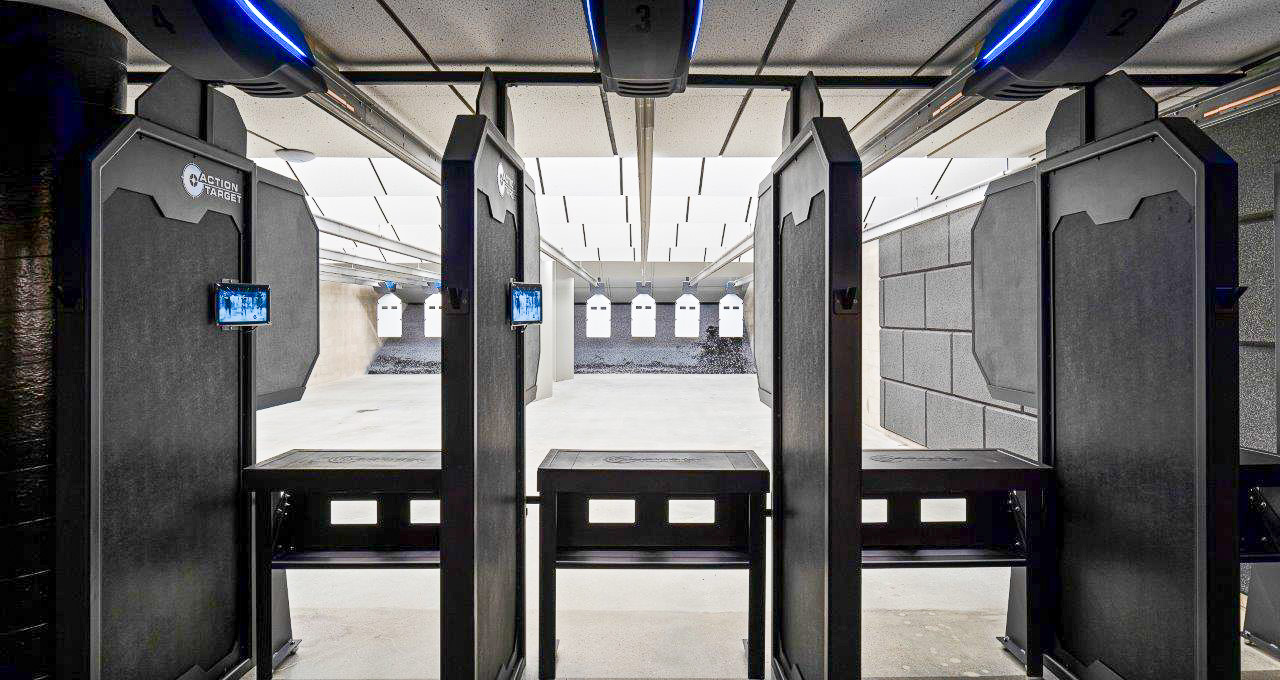
  • Target retrievers are the most common target system in commercial ranges, with cable-driven retrievers typically costing less upfront than wireless options.

  • Wireless target retrievers include software integration (SmartRange AXIS™), which factors into overall system cost.

  • The added investment into wireless systems improves efficiency, streamlines day-to-day operations, and creates a better shooter experience.

LEARN THE RANGE BUILD PROCESS AT RDDS

Action Target’s Range Development and Design Seminar (RDDS) walks you through a step-by-step process to plan and build your shooting range. You’ll meet with range consultants and subject matter experts, visit a local shooting range, and get answers to key questions on location, zoning, range design, ventilation, lead management, retail space, and community relations.

A MORE REALISTIC WAY TO ESTIMATE TOTAL PROJECT COST

Instead of relying on one broad number, it’s better to estimate a range using two layers:

  1. Real estate + construction (the building side)

  2. Range systems + specialty buildout (the range side)

1. THE BUILDING SIDE: LAND, SHELL, AND CONSTRUCTION COSTS

Even before range-specific buildout, basic construction costs vary heavily by market and building type.

As a reference point, Cushman & Wakefield’s 2025 Industrial Construction Cost Guide shows industrial distribution center core-and-shell costs averaging roughly $77 to $139 per rentable square foot (depending on building size assumptions in the guide), and it explicitly notes that land purchase and soft costs are excluded in that benchmarking.

It also benchmarks tenant improvement costs by market for industrial projects and shows that they can reach into the hundreds of dollars per square foot in some cases.

Shooting ranges tend to push beyond “typical industrial” assumptions because of what must be added.

2. THE RANGE SIDE: SPECIALTY REQUIREMENTS THAT RAISE COST

Indoor ranges require specialized construction and engineered systems beyond a typical commercial buildout, including ballistic-rated assemblies, sound control, and purpose-built ventilation for air quality and contaminant control. Resources from Whole Building Design Guide (WBDG) and its federal firing range criteria provide helpful baseline concepts, but they don’t replace a range-specific design.

Action Target is the expert in engineering and integrating complete range solutions, ensuring critical systems are right-sized for your lane count, use case, building conditions, and local requirements. Understanding these systems upfront, and working with an experienced range builder, is what keeps projects on budget and on schedule.

CONSTRUCTION, SPACE, AND COMPLIANCE FUNDAMENTALS

Prospective range owners should keep in mind that structural materials, space planning, zoning and permitting, licensing, insurance and liability, and fire and life safety can all influence the total cost of a commercial shooting range.

For a closer look at how these factors may affect your project, click for more information below.

STRUCTURAL MATERIALS

Action Target specifies concrete construction for indoor range structural walls because it provides the ballistic protection, fire resistance, and sound control a commercial range requires. As a baseline, concrete walls should be at least 8 inches thick, and wood should not be used in range construction due to penetration and fire concerns.

SPACE PLANNING

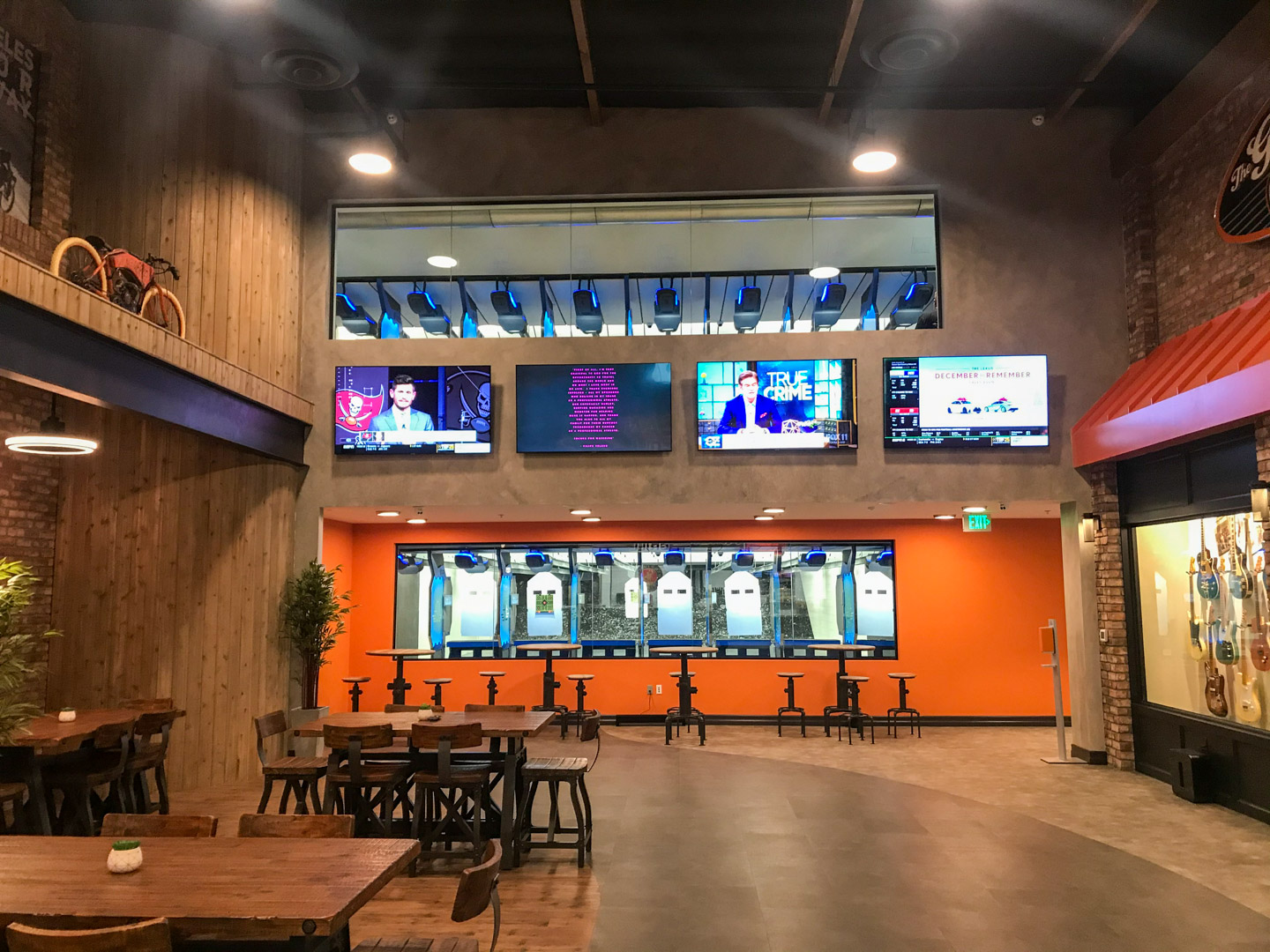
Each lane typically requires the industry standard width of 4 feet. You’ll also need sufficient space for backstops, target retrieval systems, HVAC ducting, and safety equipment. If your facility allows long guns, plan for a range length of 25–100 yards. And don’t forget customer-facing areas: reception, retail, classrooms, restrooms, offices, and potentially a gunsmith station.

ZONING AND PERMITTING

Zoning laws can restrict or prohibit commercial ranges in certain areas. Before purchasing property, confirm your zone supports firearms discharge, hazardous materials storage, and commercial use. You’ll also need building permits, lead mitigation plans, and often a fire department or city review.

LICENSING

If your range will sell or rent firearms or ammunition, or offer gunsmithing, you’ll need the appropriate Federal Firearms License (FFL) from the ATF (for example, Type 01 for retail sales or Type 07 for manufacturing/assembly). You’ll also need to meet state firearm laws, follow background check and secure storage requirements, and prepare for periodic ATF inspections.

INSURANCE AND LIABILITY

Commercial gun ranges must carry general liability insurance, commercial property coverage, and in many cases, environmental liability (for lead exposure). Monthly premiums vary based on location, size, and operations, but this is a significant ongoing cost to budget for.

FIRE AND LIFE SAFETY

Indoor ranges should be designed for life safety during medical emergencies, fire, or other urgent incidents, with clearly marked exits, unobstructed egress routes, emergency lighting, and posted evacuation instructions. Many facilities also add monitored alarms and reliable staff communications, plus accessible AEDs and trauma-capable first-aid kits, supported by staff training and written emergency procedures.

LEARN MORE ABOUT OPENING A COMMERCIAL SHOOTING FACILITY

From planning and design to compliance and operations, there are many important considerations that shape a commercial shooting facility. Explore our definitive guide to get a broader understanding of what goes into bringing a range project to life.

NEW CONSTRUCTION VS. RETROFIT: WHAT'S THE DIFFERENCE?

New builds give you total control over layout and systems but come with higher upfront costs and longer timelines. They’re ideal when zoning, site selection, and infrastructure permit full customization. Retrofits can be cost-effective if the existing structure meets critical requirements such as ceiling height, wall strength, slab rating, and air volume. However, converting a non-compliant space can be more expensive than starting fresh. We help determine feasibility early to avoid missteps. 

COST BREAKDOWN BY SYSTEM AND COMPONENT

Below is a practical way to view costs in buckets. Some categories are best estimated per-square-foot by your GC and design team, while range systems are often estimated by lane count and performance requirements.

START WITH A RANGE EXPERT

The earlier you involve Action Target, the smoother the build. From site selection and layout to compliance and critical systems, our team can guide you step by step and help you avoid costly surprises.

MECHANICAL, ELECTRICAL, AND PLUMBING (MEP) UPGRADES: THE "HIDDEN" SCOPE THAT IMPACTS COST

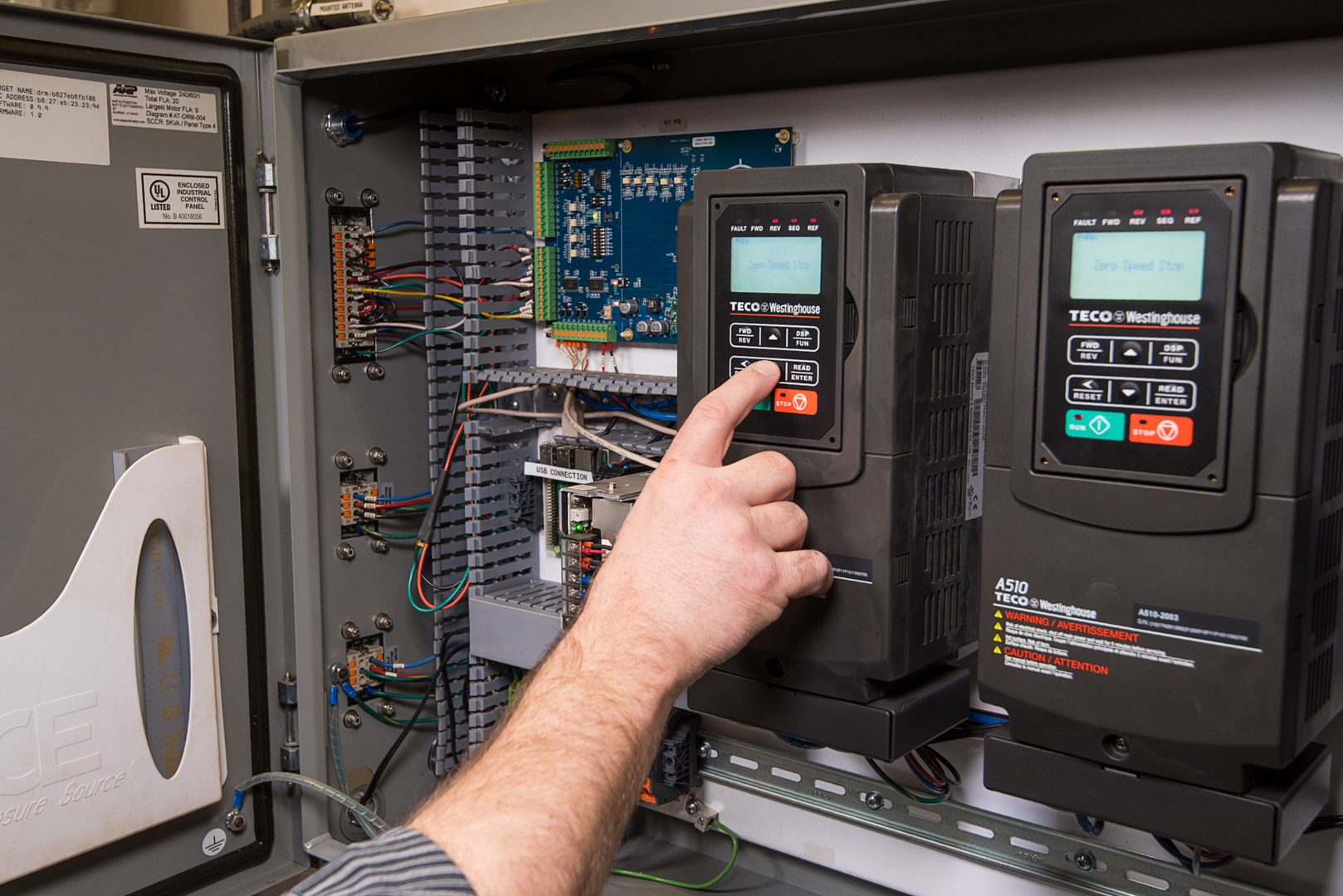
Indoor ranges place heavy demands on mechanical and electrical infrastructure, especially when ventilation and filtration requirements are defined. Many projects require electrical service upgrades, dedicated circuits for range equipment, controls integration, and mechanical coordination for ducting, exhaust routing, and rooftop equipment. Action Target range specialists can help ensure these MEP requirements are properly defined and aligned with your range design so critical systems are up to spec.

BEYOND THE BUILD: ONGOING COSTS THAT AFFECT PROFITABILITY

Construction is only part of the investment. A realistic plan also budgets for ongoing operating costs, such as:

Accounting for these early helps you set pricing and membership strategy with fewer surprises after opening day.

REVENUE POTENTIAL VS. CAPITAL INVESTMENT

A well-run commercial indoor range can offer excellent return on investment. Primary revenue streams include:

  • Hourly lane rentals and memberships
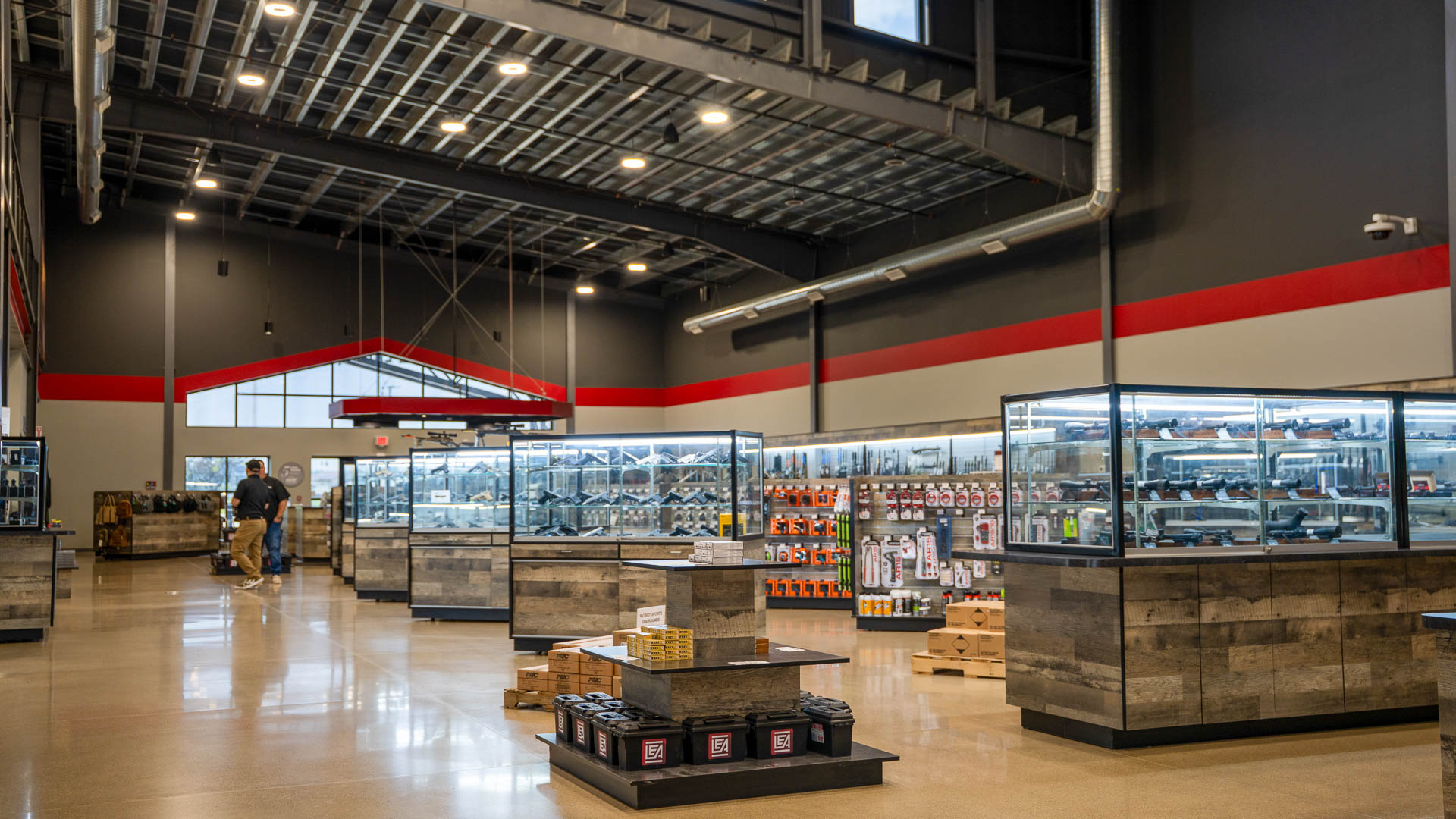
  • Firearm rentals and retail sales
  • Ammunition and accessories
  • Training classes (CCW, basic firearm safety, tactical courses)
  • Events and private bookings
  • Gunsmith services or range-exclusive gear

The National Shooting Sports Foundation (NSSF) reports the U.S. firearm industry has grown 379% since 2008, generating $80B+ in economic impact, with shooting ranges helping drive demand through a mix of entertainment, training, and retail. The opportunity is strong, but long-term profitability depends on investing in the right infrastructure, staying compliant, and running disciplined operations.

THE BOTTOM LINE

Building a commercial indoor shooting range takes careful planning, experienced design coordination, and disciplined execution. When you account for the full scope, from real estate and construction to ventilation, containment, acoustics, and compliance, early planning helps clarify project requirements, align expectations, and give you a more accurate understanding of total cost.

Action Target helps you evaluate feasibility, right-size critical systems, and coordinate a smoother path through design and build. No matter where you are in the process, contact a consultant to get expert guidance on your next step.

ADDITIONAL QUESTIONS

A common planning-to-opening window is 1 to 3 years, driven by zoning approvals, permitting, construction scope, and equipment lead times. Complex jurisdictions or major build-outs can push timelines longer.

A rough location (or market), estimated lane count, whether you’ll allow long guns, and your business model (memberships, training, retail, LE/MIL) are helpful starting points. Even a basic budget range and desired opening timeline can speed up early planning. If you don’t have all of that yet, contact us anyway, we can help you understand what goes into a range, clarify options, and identify the right next steps.

Underestimating ventilation and lead management requirements, choosing a building that can’t support ballistic and sound needs, delaying permitting conversations, and bringing in range specialists too late are common mistakes. Another frequent issue is under-planning support spaces like classrooms, retail, and lobby flow.

Expect recurring costs for HVAC/filtration maintenance, lead management and reclamation, target and trap service, consumables, insurance, and compliance documentation. Building utilities can also be significant due to ventilation demands.

Design with scalability in mind: reserve space for additional lanes or classrooms, plan mechanical capacity and routing for future upgrades, and select systems that can be expanded in phases. A good design team can help you avoid rebuilding core infrastructure later.

Table of Contents

READY TO TAKE YOUR FIRST STEP?

From your first question to your final shot, Action Target is your trusted partner—guiding you every step of the way.

SHARE THIS ARTICLE

A large variation of the Action Target logo icon in white.

Written By: Action Target

Action Target is the leading global expert on modern shooting ranges. Since 1986, the company has partnered with thousands of range owners worldwide to design, install and maintain world-class shooting ranges, systems, and equipment for law enforcement, military, educational, commercial, and residential markets. Action Target provides solutions for indoor and outdoor shooting ranges, modular ranges, shotgun ranges, and shoot houses. As the industry’s broadest end-to-end solution provider, Action Target also offers a comprehensive selection of aftermarket range service including parts, and maintenance programs, rubber berm trap cleaning, metals recycling, hazardous waste and filter disposal, and an online store for range supplies and targets.