How to Build a Home Shooting Range: Plans, Safety, and Setup

QUICK ANSWER

A home shooting range offers unmatched control, privacy, and convenience for firearm training, but it demands professional planning to ensure safety and compliance. From zoning and ventilation to backstops and target systems, this overview guide walks you through the essential steps for building an indoor range that performs like a professional facility while fitting within a residential environment.

Action Target supports home range projects with a start-to-finish approach to the live-fire component, helping with range design and providing manufactured range equipment and installation to make the process as smooth as possible. If you’re considering a home shooting range, contact Action Target early to get expert guidance on feasibility, space planning, and the critical systems that go into a safe indoor range.

Table of Contents

DEFINE YOUR PURPOSE AND REQUIREMENTS (START HERE)

Before you sketch layouts or compare equipment, define what you want your range to accomplish. If you’ve already started building, that’s fine too. Clarifying your goals now helps you spot gaps and make better decisions on the remaining design and equipment choices.

Start with your use case:

  • Skill sustainment for duty/carry, home defense readiness, or recreation?

  • Handgun-only, pistol-caliber carbine, or rifle-rated?

  • Low to moderate round counts, or more frequent, high-volume use?

  • One lane for solo reps, or multi-lane use for family and guests?

Pick a range profile early to keep decisions simple and focused as you plan your layout, features, and equipment:

  • Essential: Clean, purpose-built, reliable; minimal complexity

  • Entertainer: Enhanced experience for guests and variety of use

  • Premium/fully customized: Highest-end finishes, comprehensive technology integration, and maximum personalization

With your goals defined, you can plan the space and core systems around your intended use, then select range equipment that fits your layout and vision.

DO YOU NEED PERMITS OR APPROVALS TO BUILD A HOME SHOOTING RANGE?

Building a home gun range is possible in many areas, but feasibility depends on local zoning, discharge ordinances, building permits, and insurance requirements. Start by contacting a range consultant to confirm you’re allowed to operate an indoor range at your address, then validate what your jurisdiction requires for construction, ventilation, and noise.

Address approvals early to keep your project moving smoothly and your range design on track. Indoor home ranges can be possible in many locations, but they’re often shaped by local rules and permitting realities.

  • Because rules differ by city and county, we recommend contacting an Action Target consultant to help you navigate feasibility and compliance. Constraints may include:

    • Local building codes may outline requirements for an indoor home shooting range or prohibit construction in certain areas.

    • Local zoning regulations may prohibit firearm discharge in residential areas or restrict shooting ranges to specific zones.

    • Environmental and health regulations (local, state, and federal) can dictate minimum standards for air quality, ventilation, filtration, and contaminant control.

    • Homeowner’s associations (HOAs) may prohibit, restrict, or tightly control where and how an indoor home shooting range can be built or maintained.

  • Many homeowners don’t realize this up front: some insurers may require a rider, impose conditions, or decline coverage depending on how the range is built and used. Address this early before construction.

  • Some homeowners build the room first and complete the range components later, which can be a practical way to manage timelines.

  • The key is to plan the space with the end use in mind so your layout, penetrations, and utilities support a home shooting range from the start and align with local permitting and inspection requirements.

  • Before you commit to construction, review your plan with your architect/contractor team and a range consultant so you can move forward with confidence.

  • Early planning checklist:

    • Confirm zoning and local rules for firing firearms on your property

    • Identify required permits and inspections, and when each occurs

    • Validate structure, electrical capacity, and HVAC/ventilation feasibility

    • Account for long-lead items like bullet traps, ventilation components, and doors

HOW MUCH SPACE DO YOU NEED FOR A HOME GUN RANGE?

How much space you need for a home shooting range depends on your intended distances, calibers, and lane count. Plan for lane width, safe entry/exit paths, and room for a bullet trap, baffles, ventilation ducting, and maintenance access, not just target distance. Your room is part of your ballistic containment system. The structure must match what you plan to shoot.

SPACE PLANNING

For home indoor shooting ranges, construction requires substantial, reinforced materials rather than relying on residential framing. Preferred performance-oriented construction targets include:

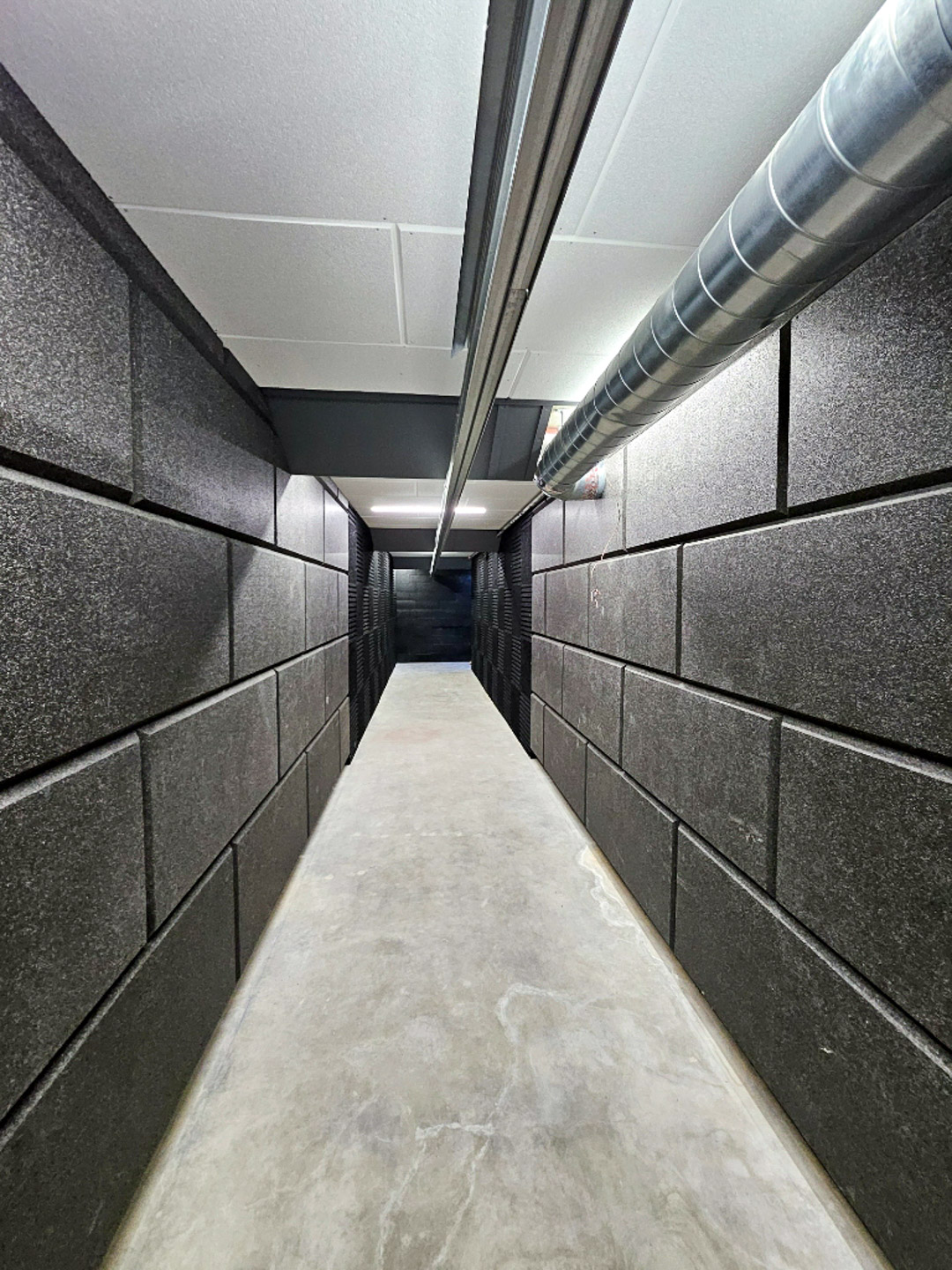
  • Walls: solid concrete construction at least ~8” thick (filled CMU, tilt-up, or poured in place) and 4,000 PSI

  • Ceiling: should be 4,000 PSI concrete as well; avoid assemblies with voids where ballistic protection is compromised

  • Floor: use at least 3,000 PSI concrete, with 5,000 PSI preferred for added durability and safety
PRACTICAL SPACE GUIDELINES

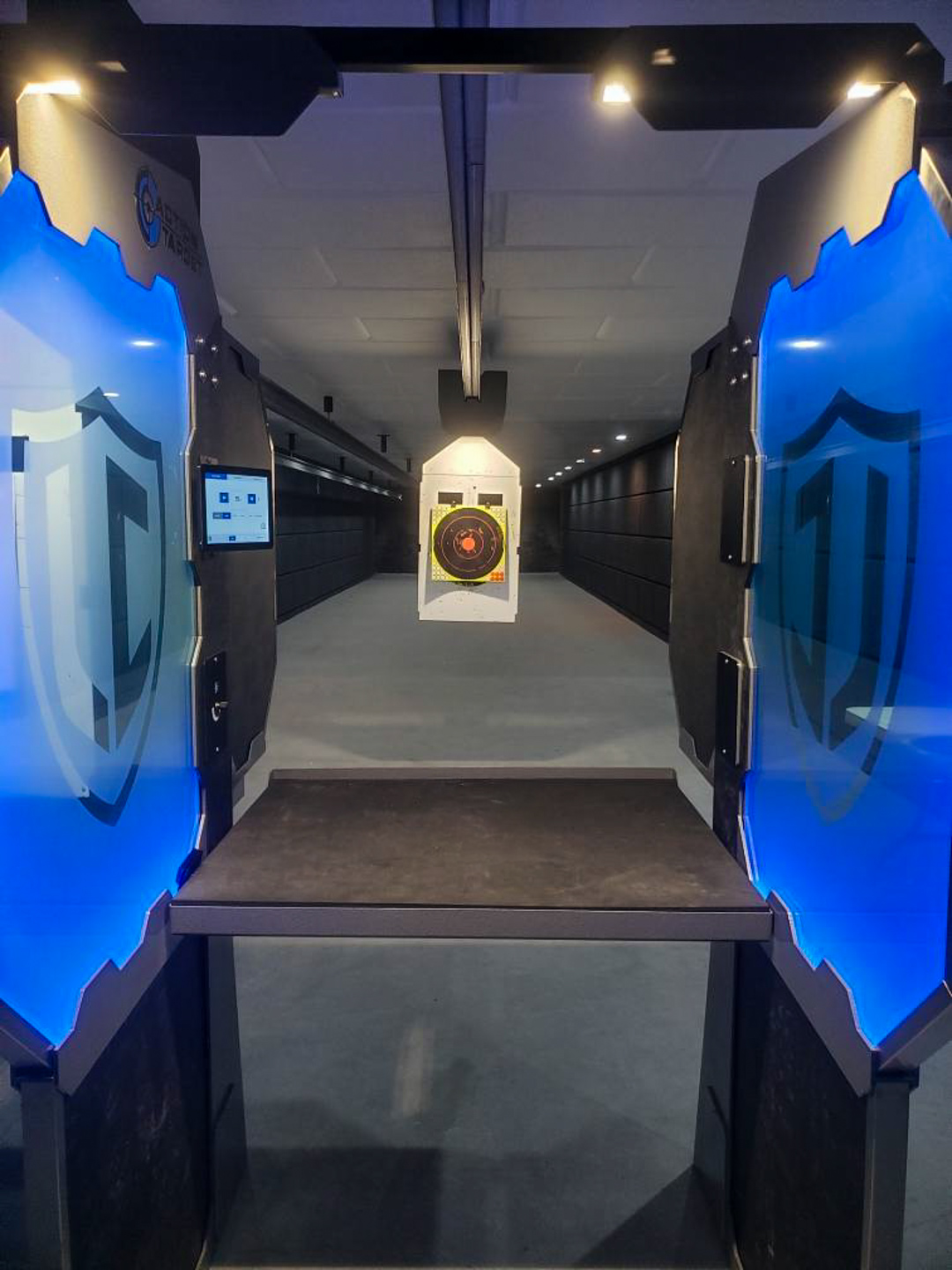
  • Preferred (not required) two-lane baseline width: plan for a little over 8-10 ft to accommodate for two full 4-ft lanes
  • Lane width: 4 ft minimum per lane (industry standard)
  • Lane length: the lane can be as long as your space allows. Set aside about 15 ft for the bullet trap and 15 ft behind the firing line, then whatever length remains becomes your target distance
  • Height + airflow planning: 12–14 ft is ideal, but many home shooting ranges can work with less; Action Target can often design around lower ceiling heights depending on layout, baffles, and ventilation needs

SAFETY LAYERS TO INCLUDE

  • Ceiling baffles to manage stray rounds and protect infrastructure

  • Ballistic-rated doors or a controlled entry/vestibule

  • Clearly marked exits and unobstructed pathways

  • Shooting stalls to reduce cross-lane risk and improve shooter comfort

  • Acoustic fascia on baffles, ceilings, and walls to help control reverberation, reduce noise fatigue, and improve comfort and communication in a confined indoor space.

QUESTIONS TO ANSWER BEFORE YOU COMMIT TO A LAYOUT

  • Is there enough length to build an adequate range while staying within property lines and setbacks?

  • Do local building ordinances allow a structure tall enough to function as a shooting range (including baffles and ventilation)?

  • If you’re remodeling, is the existing structure suitable for the added walls, ceiling systems, ventilation, and range equipment?

  • Do you have a suitable containment structure, such as poured concrete walls or filled CMU block, to safely contain rounds fired?

TALK TO A HOME RANGE CONSULTANT

Have a space in mind or still weighing options? Our team can help you confirm feasibility, choose the right equipment, and plan a home shooting range that’s safe, functional, and built to last.

WHAT VENTILATION DOES AN INDOOR HOME SHOOTING RANGE REQUIRE?

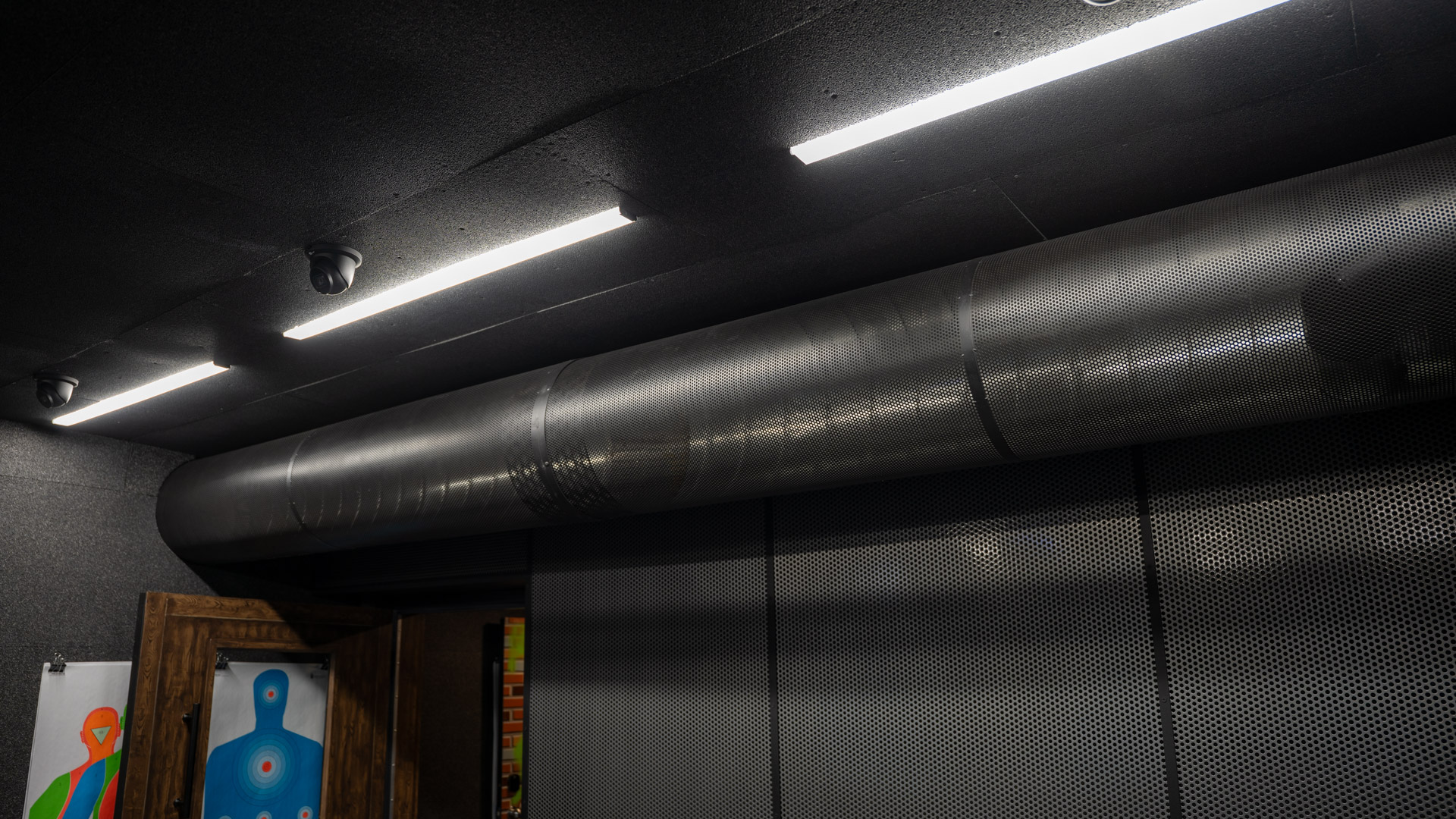
An indoor home shooting range requires purpose-built ventilation to control airborne lead and combustion byproducts. Your goal is consistent downrange airflow, slight negative pressure, and effective filtration (commonly HEPA as part of the system design). Avoid tying range airflow into household HVAC. If ventilation isn’t engineered correctly, the range may be unsafe to use, regardless of how strong the structure is. Airflow is one of the most important systems in an indoor shooting range. It must be engineered, not improvised.

  • Use a dedicated system (not tied into household HVAC)

  • Maintain negative pressure and directional airflow downrange

  • Ensure consistent airflow performance at the firing line

  • Incorporate proper filtration (commonly HEPA as part of the filtration strategy)

  • Integrate a heating and cooling system for year-round temperature control
  • Ventilation isn’t “install and forget.” You’ll need:

    • Filter replacement intervals based on usage

    • Routine inspection and performance checks

    • Housekeeping that supports lead and dust control (avoid dry sweeping; use appropriate methods and tools)

Because home-range ventilation is complex, it should be designed and installed by a qualified mechanical contractor. Action Target can provide specifications and design guidance, but the contractor typically supplies and installs the ventilation equipment.

NOISE CONTROL AND COMFORT (FOR YOU AND YOUR NEIGHBORS)

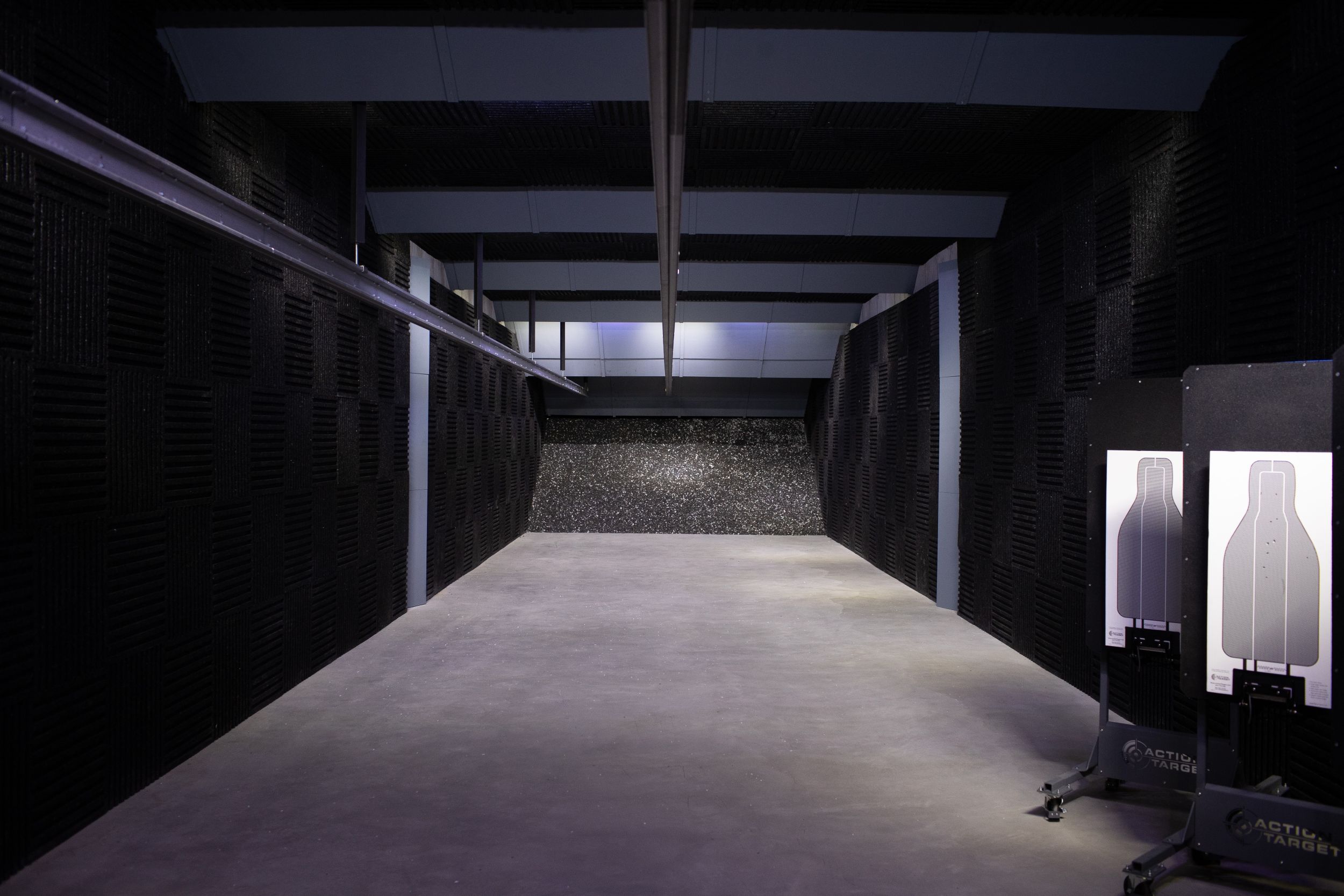
Indoor home shooting ranges can be designed for better sound control by combining sound-isolating construction with range-specific treatments. Action Target sound abatement treatments can be installed on the walls and ceilings throughout the range, and can also be added to ceiling baffles to reduce reverberation and help keep noise contained.

PRACTICAL NOISE-CONTROL STRATEGIES

  • Sound abatement options: Add acoustic materials to the baffles, ceilings, and walls using options like acoustic tile, PEPP, wood fiber, or SureStop™ rubber, depending on your style preference and sound-control desire.
  • Sound-sealed doors: use gasketed frames and proper door construction to limit sound transfer

  • Seal penetrations: properly seal lighting, ventilation, and electrical penetrations to maintain sound control performance

The goal is a range that feels comfortable to train in consistently, with noise controlled inside the shooting bay and minimized outside it.

TARGETS AND BACKSTOPS (CONTAINMENT + TRAINING VALUE)

Your home shooting range is defined by two essentials: containment and capability. The bullet trap is the foundation, built to safely capture rounds in an indoor environment. The target system builds on that foundation, shaping how you train, how quickly you can run reps, and how much flexibility you have for different drills.

  • Rubber berm bullet traps (typical recommendation): effective and quiet, with periodic maintenance/cleanout based on use

  • Rubber block bullet traps (space-driven alternative): an option when the footprint won’t accommodate a rubber berm system; typically used when length or space constraints drive the decision

  • Trap options by caliber: Rubber berm traps are available in standard configurations, with an optional .50 BMG upgrade. Rubber block wall traps can be paired with 1/4″, 3/8″, or 1/2″ steel backings based on caliber preference and shooting frequency.

  • Bottom line: for most home shooting ranges, the choice comes down to available space and how the trap fits the lane length and room layout
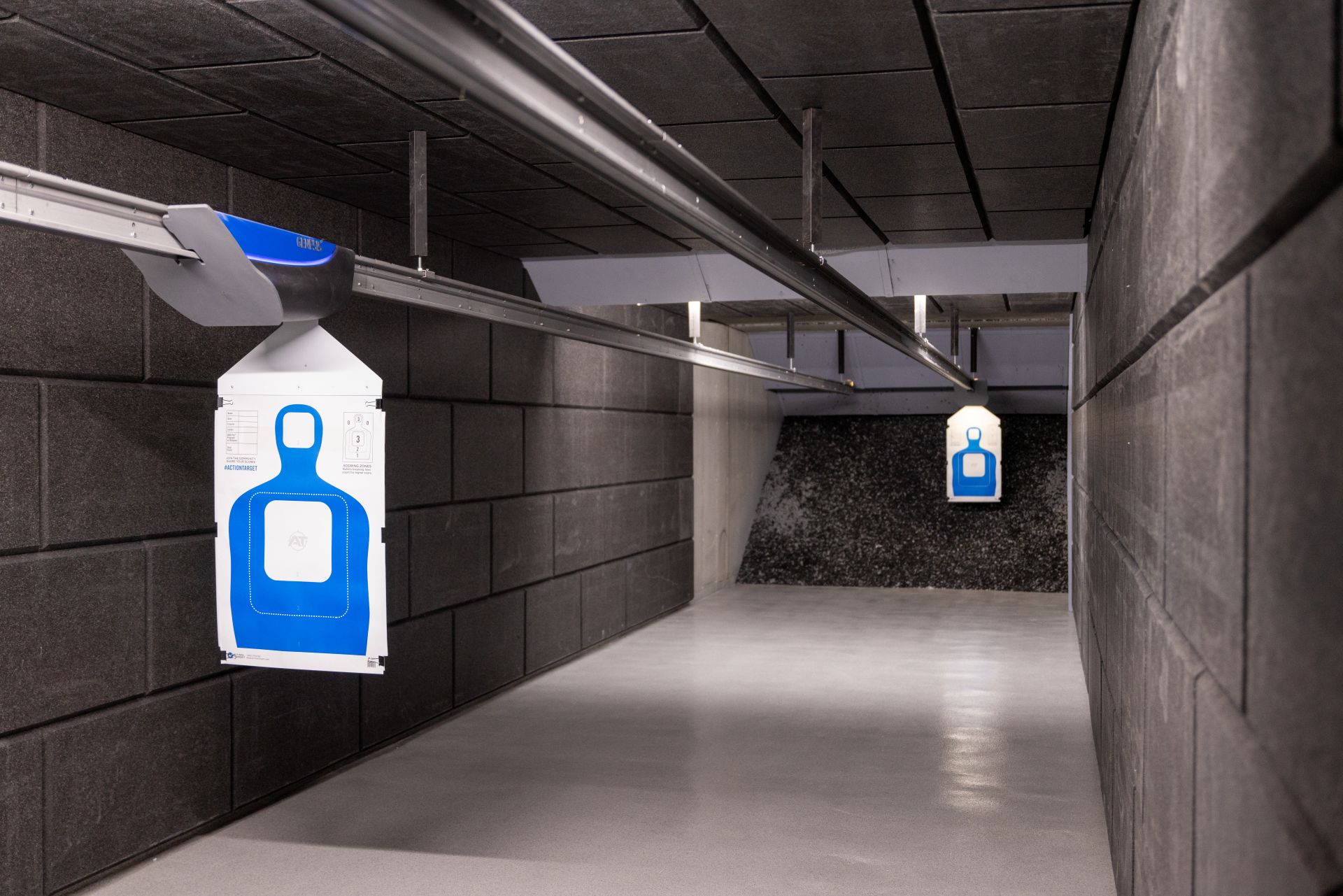
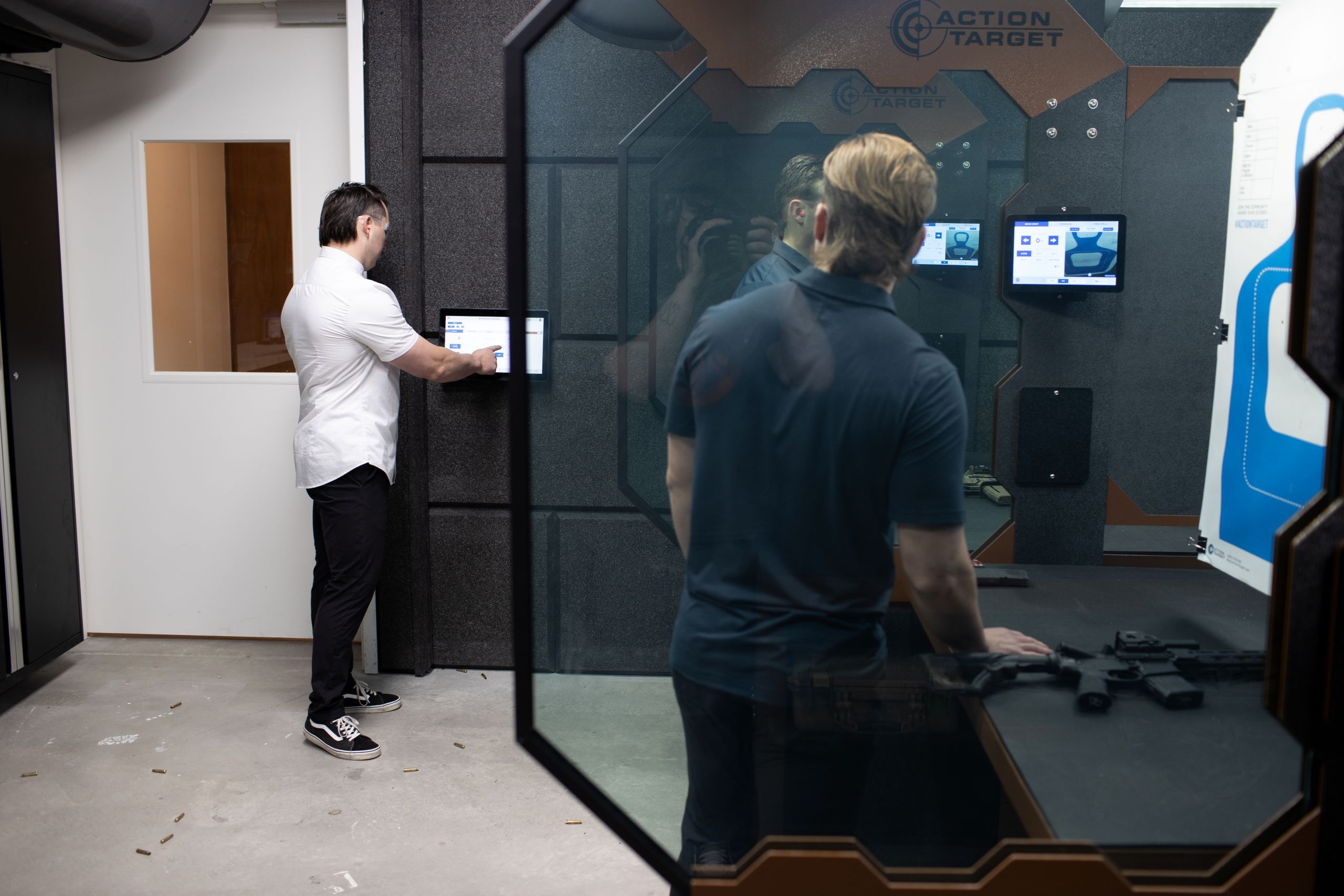
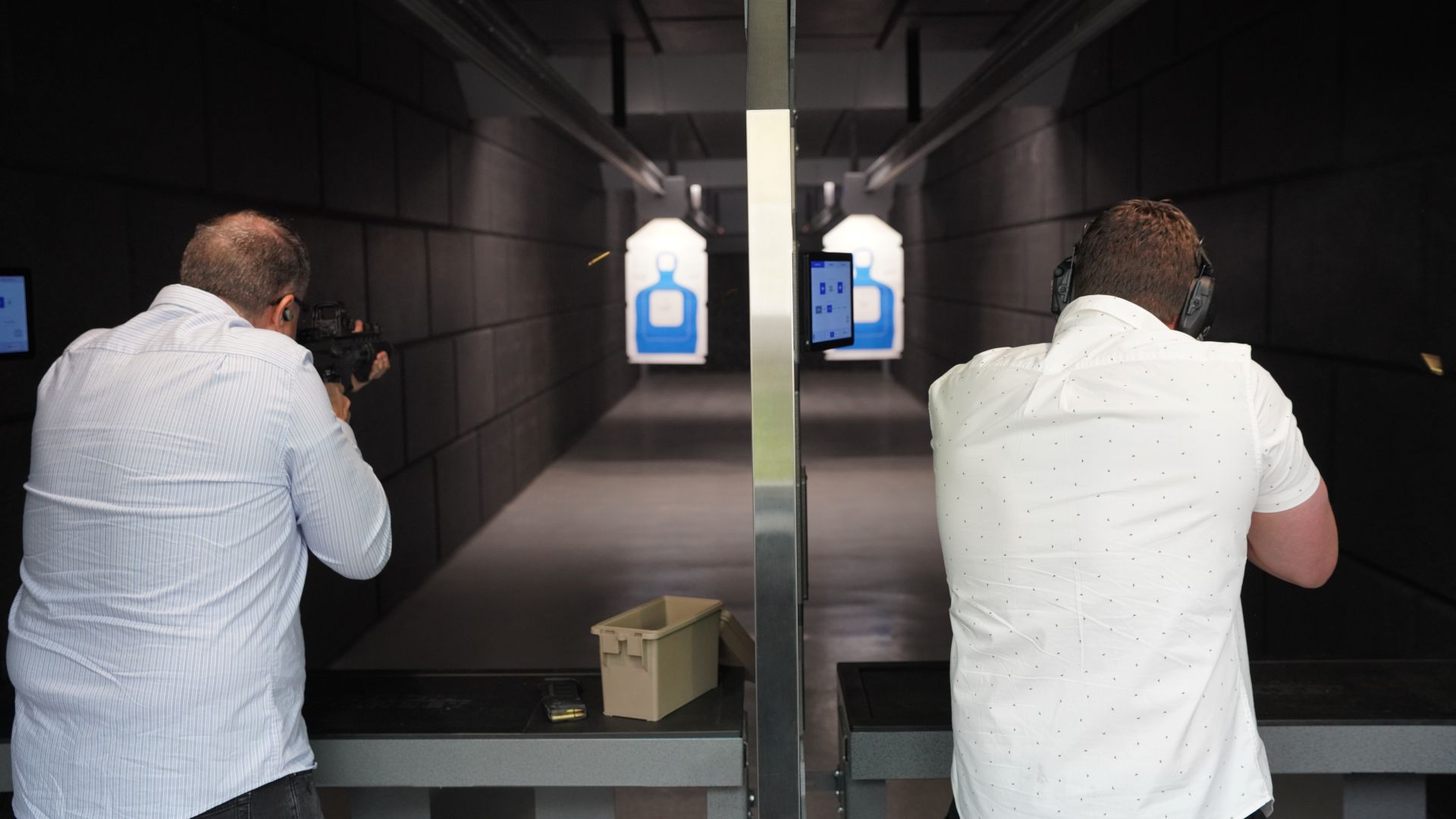
  • Wireless target retrievers (most common): adjust target distance from the firing line in seconds, keep your rhythm, and maximize reps without going downrange.
    • More purposeful practice: set repeatable distances for zeroing and drills, with options like built-in drills, timing, and lighting to keep sessions structured.
    • A better range experience: simple controls make the range easier for family and guests to use, with room to expand into more automation and feedback later.
  • Tactical configurations (space-dependent): in larger home shooting ranges, portable bullet traps can support more dynamic setups, but that requires additional space and safety planning

POWER, LIGHTING & CONTROLS

Strong infrastructure makes everything else easier.

Core considerations:

  • Dedicated electrical circuits and proper load planning

  • Bright, consistent lane lighting (often with zoned or dimmable options)

  • Emergency lighting and clear controls

  • Centralized control options for ventilation/lighting/targets when desired

VISIT OUR HOME SHOOTING RANGES PAGE

Want to see how Action Target’s turnkey solutions help homeowners build the indoor shooting range of their dreams? Visit our Home Shooting Ranges page to learn more.

RULES, SECURITY & DAILY OPERATIONS (RUN IT LIKE A PRO SHOOTING RANGE)

Even in a private environment, consistent rules prevent complacency.

MINIMUM POSTED SOPs SHOULD COVER

  • Hot/cold range indicators and procedures

  • Firearm handling expectations and muzzle discipline rules

  • Required PPE (eye/ear protection)

  • Malfunction procedures and cease-fire protocols

  • Emergency plan (first aid, comms, exits)

SECURITY FUNDAMENTALS

  • Controlled access (locked entry)

  • Authorized users only

  • Secure firearm and ammo storage in compliance with local requirements

SERVICE, SUPPORT & SUSTAINMENT

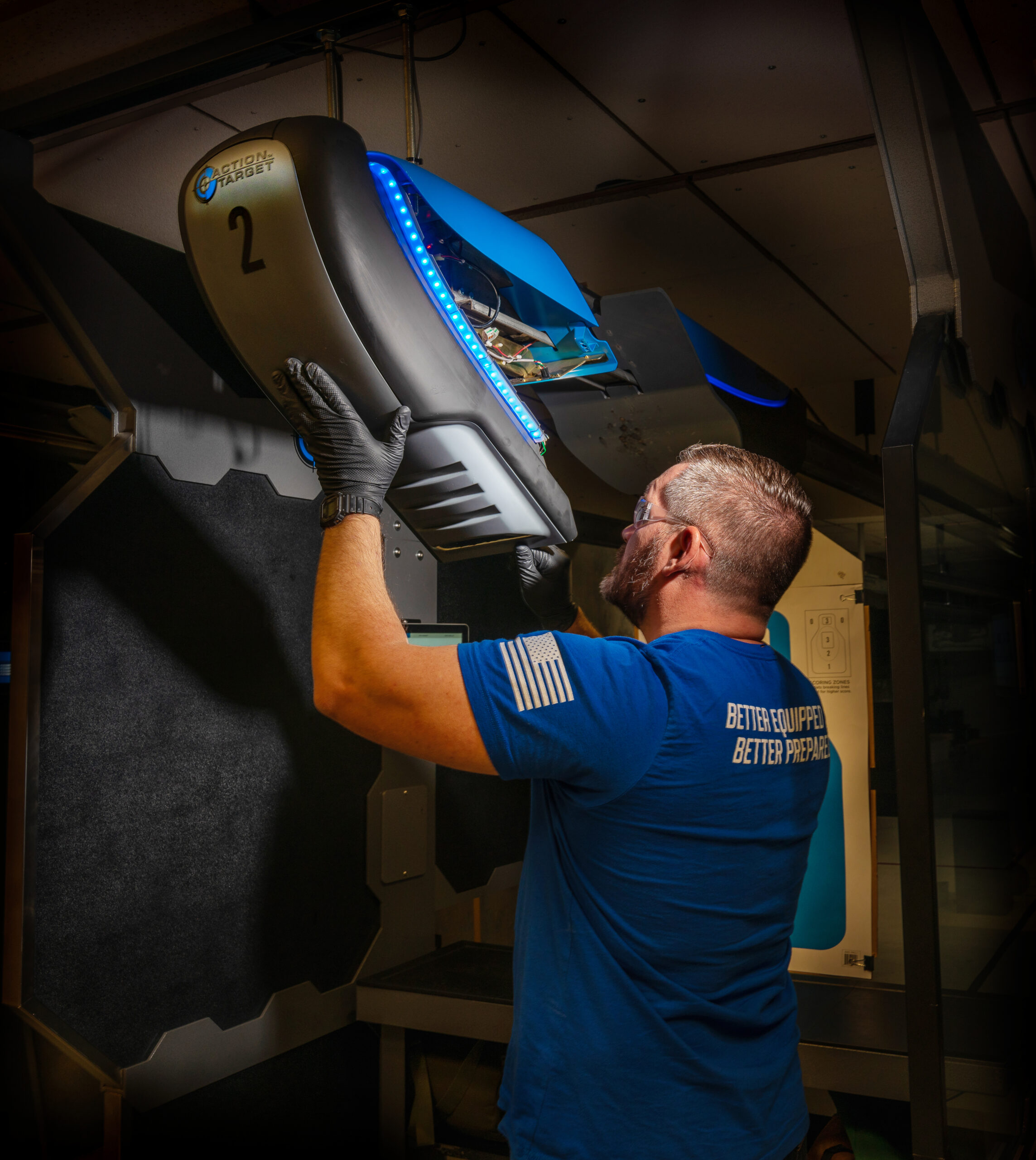
A home shooting range is a long-term investment, and peace of mind comes from knowing your equipment is built right and supported after installation. Action Target’s range equipment is engineered for durability and performance, and our aftermarket services team is available to help you keep systems running smoothly through ongoing support and sustainment programs.

  • We’ll verify:
    • Airflow direction and performance

    • Bullet trap alignment and function

    • Lighting reliability and control access

    • Noise mitigation effectiveness

BUDGET BENCHMARKS

Costs vary based on lane length, room design, sound control, and equipment selection. For range equipment alone, many home projects fall in the $60,000 to $250,000 range. You should also budget for ventilation and the room build-out as separate project costs, and keep in mind both can vary widely based on feasibility, footprint, lane count, duct runs, and whether you want heating and cooling. Don’t forget to include delivery and installation, along with architect, general contractor, and mechanical contractor costs to design and build the space properly.

THE BOTTOM LINE

Building a home shooting range can be one of the most valuable upgrades you make when it’s planned correctly from the start, giving you a dedicated space for consistent training and a standout feature you’ll be proud to share with friends and guests.

Action Target can guide you from early planning through installation and long-term sustainment. With more than 40 years of range-design experience, we help you avoid costly missteps, right-size critical systems, and tailor the layout and equipment to your needs. Contact Action Target to speak with a consultant and take the next step toward building the home shooting range you’ve been envisioning.

FREQUENTLY ASKED QUESTIONS

Yes, if your local zoning, building code, inspections, environmental, and spacing requirements allow it.

Often, yes. Many projects require approvals tied to structural work, ventilation, electrical, and sound control.

It varies, but a common (not required) baseline is two lanes at a little over 8-10 ft wide. Plan about 15 ft for the bullet trap and 15 ft behind the firing line, then use the remaining length as your target distance.

12–14 ft is ideal for space for ceiling baffles, ventilation, and lighting, but many home shooting ranges can work with less. Action Target can often design around lower ceilings depending on layout and ventilation needs.

A purpose-built ventilation system that maintains downrange airflow, negative pressure, and effective filtration (often HEPA), not tied into household HVAC.

Target retriever systems are the most common target solution, and rubber berm bullet traps are a typical choice when space allows (rubber block wall traps are used when space is tighter).

Action Target supports range equipment (bullet containment, target systems, and shooting stalls), coordinates ventilation, and provides post-build service and maintenance. You’ll manage the room construction and infrastructure through your contractor.

Table of Contents

READY TO TAKE YOUR FIRST STEP?

From your first question to your final shot, Action Target is your trusted partner—guiding you every step of the way.

SHARE THIS ARTICLE

A large variation of the Action Target logo icon in white.

Written By: Action Target

Action Target is the leading global expert on modern shooting ranges. Since 1986, the company has partnered with thousands of range owners worldwide to design, install and maintain world-class shooting ranges, systems, and equipment for law enforcement, military, educational, commercial, and residential markets. Action Target provides solutions for indoor and outdoor shooting ranges, modular ranges, shotgun ranges, and shoot houses. As the industry’s broadest end-to-end solution provider, Action Target also offers a comprehensive selection of aftermarket range service including parts, and maintenance programs, rubber berm trap cleaning, metals recycling, hazardous waste and filter disposal, and an online store for range supplies and targets.